Source Non-Woven Wear-Resistant Geotextile for Roads, Drainage, and Mines
Find 30 listings for non-woven wear-resistant geotextile suitable for water conservancy, road construction, and airport projects. Buyers can compare specifications including width, weight, and material types like PP or PET from verified Chinese manufacturers.
Key considerations
Products List


Durable Nonwoven Geotextile with Superior Flexibility and Resistance
$0.10 - $2.30
MOQ: 1000 Square Meters


Insulation Non-Woven Non Woven Geotextile for Reinforcement Nonwoven Fabric with Low Price
$0.25 - $1.65
MOQ: 1000 Square Meters


Needle Punched Geotextile Fabric Non Woven Waterproof Geotextile
$0.19 - $1.99
MOQ: 1000 Square Meters


High Performance Non-Woven Nonwoven Fabric Polyster Non Woven Geotextile
$0.19 - $1.99
MOQ: 1000 Square Meters


Non-Woven Geotextile for Keeping Stability of Water Conservation Project
$0.10 - $0.16
MOQ: 1000 Square Meters


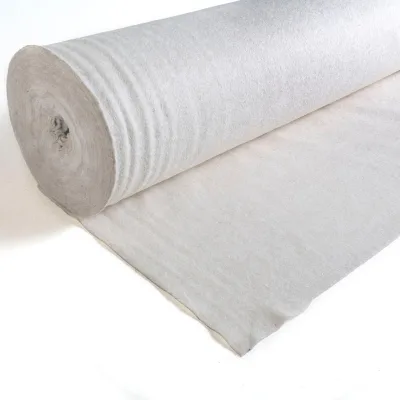


Geotextile Non Woven Geotextile (300gr/m2) Polyester Non Woven Fabric
$0.15 - $2.95
MOQ: 2000 Square Meters

Road Construction and Soil Reinforcement Premium Nonwoven Geotextile
$0.15 - $2.93
MOQ: 1000 Square Meters

Geotextile Non Woven Geotextile (100gr/m2) Polyester Non Woven Fabric
$0.21 - $0.68
MOQ: 1000 Square Meters


Comprehensive Sourcing Guide
Strategic Sourcing Guide for Non-Woven Wear-Resistant Geotextiles
Understanding Product Fundamentals and Material Composition
Sourcing non-woven wear-resistant geotextiles requires a precise understanding of the material science underpinning these industrial fabrics. The core of this product category lies in the distinction between different fiber types and manufacturing techniques. Based on available market data, the material composition for non-woven variants is frequently identified as 100% Polypropylene (PP) or Polyethylene Terephthalate (PET). The manufacturing technique is predominantly spun-bonded, a process that creates a continuous filament structure offering consistent strength and uniformity.
When evaluating suppliers, buyers must distinguish between "Non-Woven Geotextiles" and "Composite Geotextiles." While the core keyword focuses on non-woven wear-resistant materials, the market also offers composite solutions which may combine non-woven layers with woven films for enhanced waterproofing or filtration. The product classification often includes "Filament Geotextile" types, which are generally preferred for their superior permeability and filtration capabilities compared to staple fiber alternatives. The physical form is typically supplied as "Roll Packed" or in "PP Plastic Bags," with specific packing requirements varying by supplier capability.
The weight range is a critical specification that dictates the final application. Observed data indicates a broad spectrum of grammage, ranging from 10 to 200 GSM (grams per square meter). For heavy-duty wear-resistant applications, such as road reinforcement or erosion control, buyers should target the higher end of this spectrum, often aligning with standards like 80-1000g, though specific project requirements will dictate the exact target. The width of the material is another variable, with standard offerings ranging from 1 to 6.5 meters, and specific industrial standards noting a maximum width of 3.2 meters for certain configurations. Length is often customizable, with standard rolls available at 50m or 100m, or tailored to specific project needs.
Technical Specifications and Performance Attributes
The performance of a non-woven geotextile is defined by a specific set of functional attributes that must be verified against project requirements. The primary feature set for wear-resistant variants includes resistance to physical degradation and environmental stress. Key attributes observed in the market include "Wear-resistant," "Oxidation Resistance," and "Corrosion Resistant." These properties are essential for applications where the geotextile is subjected to abrasion from aggregate, heavy machinery, or harsh chemical environments.
In addition to physical durability, filtration and permeability are paramount. The product properties often cited include "Good Flexibility," "Permeability," and "Filtration." These characteristics ensure that the geotextile allows water to pass through while preventing the migration of fine soil particles, a function critical for drainage and separation applications. The material is also frequently described as having "Anti-Static" and "Anti-Tear" properties, which enhance safety and longevity during installation and service life.
For specific industrial applications, the geotextile may need to meet rigorous standard specifications. While general product models may be labeled as "NGT-200" or "BS 02," buyers must verify if the specific batch meets international standards such as ASTM or other regional equivalents. The standard width for many industrial rolls is noted as 3m, 4m, or 6m, but custom widths are available. The color of the material is typically white, which can be a factor in thermal reflection or visual inspection during construction. It is crucial to note that while some products are marketed for "Bag" usage or "Disposable Supplies," the wear-resistant geotextile category is primarily engineered for long-term infrastructure projects, including "Water Conservancy," "Roads," "Railways," and "Airports."
Compliance, Certification, and Standard Verification
Navigating the compliance landscape is a critical step in the procurement process. Buyers must verify that suppliers possess valid certifications that align with the regulatory requirements of the destination market. The "CE" mark is a frequently observed certification in the provided data, indicating conformity with health, safety, and environmental protection standards for products sold within the European Economic Area. However, the presence of a CE mark should be cross-referenced with the specific test reports and the scope of the certification to ensure it covers the specific geotextile properties being purchased.
Beyond CE, the industry relies heavily on technical standards to define quality. The data references "ASTM" and "BS 02" as product models or standard references, suggesting that suppliers may adhere to American Society for Testing and Materials or British Standards. Buyers should not assume that a product labeled with a model number automatically meets the full standard; rather, they must request the specific test data that validates compliance with the relevant ASTM or BS criteria for tensile strength, puncture resistance, and permeability.
The "Grade" of the material is another compliance indicator. In the observed data, "Domestic" grade is mentioned, which implies the material may be manufactured for local markets and might not meet international export standards without specific verification. For projects requiring high reliability, buyers should prioritize suppliers who can demonstrate compliance with international standards rather than relying solely on domestic classifications. Additionally, the "Project Solution Capability" of a supplier, such as offering "Graphic Design" or "3D Model Design," can be an indicator of their technical competence in ensuring the product fits the specific engineering constraints of a project, though this is a service attribute rather than a product certification.
Cost Drivers and Economic Considerations
The pricing structure for non-woven wear-resistant geotextiles is influenced by several dynamic factors, including material costs, production volume, and customization requirements. The observed price range in the market spans from $0.10 to $2.95 USD, a wide variance that reflects differences in GSM, material type (PP vs. PET), and order volume. Lower prices typically correlate with lighter weights (e.g., 10-50 GSM) and standard widths, while higher prices are associated with heavy-duty, wear-resistant variants (e.g., 100-200 GSM) and specialized treatments.
Minimum Order Quantity (MOQ) is a significant economic driver. The market data shows an MOQ range from 2 units to 2000 units, with specific high-volume suppliers requiring a minimum of 1000 square meters. This disparity means that small-scale projects may face higher per-unit costs or may need to consolidate orders with other buyers to meet the threshold. Buyers should also consider the "Capacity" of the supplier, with some manufacturers reporting a daily output of 20,000 units. High-capacity suppliers often offer more competitive pricing for large orders due to economies of scale, but they may have stricter MOQs.
Customization is a key cost variable. The data confirms that "Customization" is available, including custom widths, lengths, and potentially specific color or treatment requirements. While customization adds value, it inevitably increases the unit cost and may extend lead times. The "OEM" (Original Equipment Manufacturer) acceptance by suppliers indicates that branding and packaging can be tailored, which is a cost factor for buyers seeking to establish their own brand identity. Furthermore, the "Sample" availability is noted as "Free" in some contexts, which can reduce the initial cost of evaluation, though shipping costs for samples may apply.
Typical Applications and Project Suitability
Non-woven wear-resistant geotextiles are versatile materials deployed across a wide array of infrastructure and environmental projects. The primary application areas identified include "Water Conservancy," "Electricity," "Mines," "Roads," and "Railways & Airports." In these sectors, the geotextile serves multiple functions: separation, filtration, drainage, and reinforcement.
For road and railway construction, the "Wear-resistant" and "Anti-Tear" properties are critical. The geotextile is placed between the subgrade and the aggregate base to prevent the mixing of soil and stone, which can lead to structural failure. The "Good Flexibility" and "Permeability" ensure that water is drained away from the roadbed, preventing frost heave and pothole formation. In mining applications, the "Corrosion Resistant" and "Oxidation Resistance" features protect the liner systems from harsh chemical environments and abrasive tailings.
Water conservancy projects utilize these geotextiles for erosion control and filtration. The "Drainage" and "Filtration" capabilities allow the material to stabilize soil while permitting water flow, which is essential for dam construction and embankment protection. The "Insulation" and "Waterproof" features, often found in composite variants, are also relevant for containment applications. Additionally, the "Bag" usage and "Disposable Supplies" applications suggest a secondary market for packaging or temporary protective covers, though the primary value lies in permanent infrastructure.
Supplier Evaluation and Quality Assurance
Selecting the right supplier requires a rigorous evaluation of their technical capabilities, production capacity, and after-sales support. The data highlights several key indicators of supplier reliability. "Capacity" is a vital metric, with some suppliers reporting a daily output of 20,000 units, suggesting they can handle large-scale orders without significant delays. "After-Sale Service" is another critical factor, with offerings such as "Online Technical Support" and "Free Spare Parts" indicating a commitment to long-term project success.
Buyers should verify the "Project Solution Capability" of potential suppliers. The ability to provide "Graphic Design" and "3D Model Design" suggests that the supplier has the engineering expertise to assist in the design phase, ensuring the selected geotextile meets the specific load and drainage requirements of the project. The "OEM" acceptance and "Customization" options further demonstrate flexibility and a customer-centric approach.
Quality control should be a central part of the evaluation process. Buyers must request test reports that verify the "Wear-resistant," "Oxidation Resistance," and "Corrosion Resistant" claims. While the data mentions "CE" certification, it is essential to ensure that the specific product batch has been tested for the relevant mechanical properties. The "Classification" of the product, such as "Composite Geotextiles" or "Non-Woven Geotextiles," must match the project specifications exactly. A supplier that can provide samples for testing and has a track record of fulfilling orders within the specified "MOQ" and "Lead Time" (though specific lead times are not provided in the data, the capacity suggests they are manageable) is preferable.
Long-Term Procurement and Strategic Sourcing
Procuring non-woven wear-resistant geotextiles is not merely a transactional activity but a strategic decision that impacts the longevity and safety of infrastructure projects. Buyers should consider the "Design Style" and "Industrial" nature of the products, ensuring they align with the aesthetic and functional requirements of the project. The "Product Name" and "Type" (e.g., "Filament Geotextile") should be clearly defined in contracts to avoid ambiguity.
Long-term considerations include the availability of "Free Spare Parts" and "Online Technical Support," which can be invaluable for maintenance and repair phases of a project. The "Origin" of the product, often listed as "China" or specifically "Shandong, China," should be factored into logistics planning and potential tariff implications. Buyers should also assess the "Standard" compliance, ensuring that the product meets the specific "Max width" and "Length" requirements of the project to minimize waste and installation issues.
Finally, the "Customization" aspect allows for tailored solutions that can optimize performance and cost. By working with suppliers who offer "3D Model Design" and "Graphic Design," buyers can ensure that the geotextile is perfectly integrated into the project's engineering plans. This collaborative approach, combined with a thorough understanding of the material properties and certifications, ensures a successful procurement outcome that delivers value over the entire lifecycle of the infrastructure.
| Feature Category | Key Attributes to Verify | Typical Market Observation |
|---|---|---|
| Material | PP, PET, 100% Composition | 100% Polypropylene or PET |
| Weight | GSM Range | 10-200 GSM (Standard), 80-1000g (Heavy) |
| Width | Standard vs. Custom | 1-6.5m, 3m/4m/6m, Max 3.2m |
| Certification | CE, ASTM, BS Standards | CE Mark, ASTM/BS Model References |
| Function | Wear, Drainage, Filtration | Wear-resistant, Oxidation Resistant, Drainage |
| MOQ | Minimum Order Quantity | 2 units to 2000 units (1000m² common) |
| Origin | Manufacturing Location | China (Shandong region noted) |
| Service | Support & Customization | Online Support, Free Samples, OEM Available |
FAQs
What materials are used for non-woven wear-resistant geotextiles?
These geotextiles are primarily made from 100% Polypropylene or PET fibers. The material composition ensures durability while offering specific properties like oxidation resistance and corrosion resistance for long-term infrastructure use.
Which certifications should I verify for these geotextiles?
Buyers should verify the CE certification to ensure compliance with safety standards. Some products also reference ASTM or BS standards, but specific test reports are required to validate tensile strength and permeability claims.
How is the weight range defined for these products?
The weight range typically spans from 10 to 200 GSM for standard variants. Heavy-duty applications often align with specifications like 80 to 1000 grams per square meter to ensure sufficient reinforcement and wear resistance.
Can I customize the width and length of the rolls?
Yes, customization is available for both width and length to meet project needs. Standard widths range from 1 to 6.5 meters, while lengths can be customized to 50m, 100m, or other specific requirements.
What is the typical minimum order quantity for these items?
The minimum order quantity varies significantly, ranging from 2 units to 2000 units depending on the supplier. Some high-volume manufacturers require a minimum of 1000 square meters for standard orders.
Where are these geotextiles typically manufactured?
Most products originate from China, with specific manufacturing hubs in Shandong. Suppliers in this region often provide capacity up to 20,000 units per day to support large-scale infrastructure projects.
What are the primary applications for non-woven wear-resistant geotextiles?
These materials are used in water conservancy, roads, railways, and mines. They provide essential functions like drainage, filtration, and reinforcement while resisting wear, tears, and environmental degradation.